Choose a recurring task that takes up time. Record which data it needs, where that data lives, its format and who can approve its use. You can then choose a tool and deployment model. A first trial needs a manageable, reliable set of information and someone who can judge the results.
On 19 October 2026, Friedrich Merz urged small and medium-sized businesses at the Invest in Germany Summit to put their data to work with AI (NVIDIA report). That day, two German federal ministries signed a declaration of intent with NVIDIA on physical AI, meaning AI for the physical world.
Our practical interpretation for a business with 30 employees: work can start with a recurring office task. You can keep the scope to the documents that support that particular workflow.
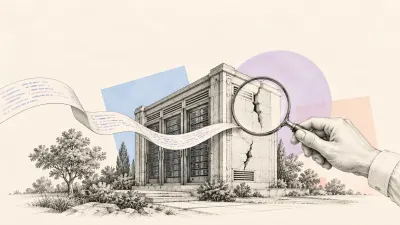
Trace one workflow back to its sources
Consider a hypothetical spare-parts supplier. The office answers enquiries about suitable components. The part number is in the ERP system, compatibility information is in manufacturer PDFs and a later product change is buried in an email. An AI assistant would bring these facts together in a draft reply. The employee responsible would still approve it.
If you have yet to choose a task, read our guide to getting started with AI. Once you have chosen, trace three typical cases backwards. Which documents did the team actually need? Who supplied knowledge that had never been written down? Which question could the available data not answer?
Map the data for that task
A first inventory for this example might look like this:
- ERP system: part number, description and stock; available as structured exports, maintained by the inventory team.
- Manufacturer documents: PDFs with a version date and scope; purchasing identifies the current edition.
- Product changes: individual emails; relevant changes need to enter a maintained source.
- Staff knowledge: exceptions known to one employee; document them together and have a specialist check them.
For each source, add its location, access group and the person responsible for changes. A spreadsheet is enough. Look first for gaps that could cause a wrong answer: missing versions, conflicting part numbers or an exception that exists only in someone's memory.
Restructuring the whole company's files would be too much for this trial. Start with the documents the task needs. Remove duplicates, mark superseded editions and make scans searchable where their contents matter. Then spot-check that tables and part numbers remain readable.
Separate maintenance from permission to use
The person maintaining a file may not have sole authority to decide how it can be used. Discuss the trial's documents with the relevant department and IT. Customer data also brings contractual and confidentiality questions. Involve your data protection officer and, where relevant, employee representatives early.
Germany's Data Protection Conference recommends employer-provided devices and accounts, with binding internal AI rules. Processing personal data requires checking the appropriate legal basis. Access to a tool therefore does not authorise uploading an entire folder.
Let the data's sensitivity shape its route
Distinguish public product documents, internal business knowledge, personal data and particularly sensitive information. These groups help with planning; the specific use still needs assessment. Exclude data the task does not need from the trial set.
For each possible solution, establish where inputs and replies go, who can see them, how long they remain and what enters logs or backups. For a cloud service, check contractual terms, a data processing agreement where applicable and the providers involved. A local deployment also needs access controls, updates and backups in its scope. Our private AI overview and hosting comparison explain the deployment choices.
Test the difficult cases
Our suggestion is to start with 20 approved sample cases. Include an enquiry supported by an outdated document, one with missing information and one with an invalid part number. Before testing, identify the source for the correct answer and decide when the system should ask a question or stop.
A useful draft reply shows its source and keeps unresolved points visible. A citation alone does not establish accuracy: the reviewer must check that the passage supports the answer. Our article on knowledge systems with sources explains the technical approach.
Compare the old handling time with the new time, including review and correction, for the same cases. Count wrong answers and unnecessary follow-up questions separately. That gives you a basis for deciding whether the workflow helps the office. Twenty cases are a suggested starting point, rather than evidence of reliable operation across every enquiry.
What you can have ready on Monday
By the end of the first team discussion, you should have one task, the sources it needs, outstanding permissions and a named owner. If a current list is missing, maintaining it is the next piece of work. If the data is usable, you can commission a bounded trial.
AI Værk supports this work from the initial assessment through implementation and operation. Together we check whether an existing tool is enough or an internal AI assistant would help. Bring the task, your systems and the unresolved data questions to a free first call of around 30 minutes.